
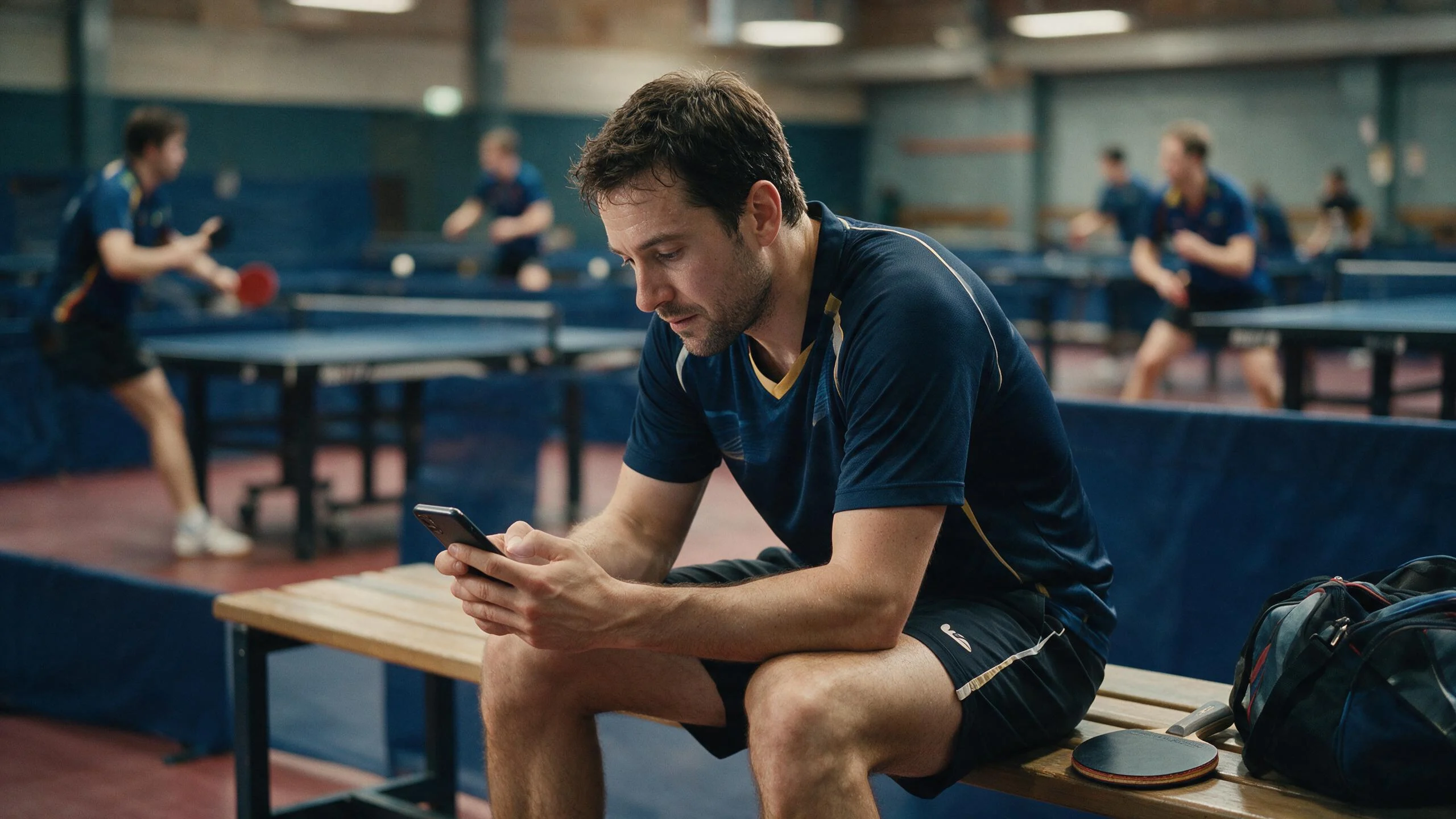
Two hours of training, three times a week, for months. And still the same outcome: you keep losing to that one club-mate, and at the tournament you go out at exactly the stage you did last year. Almost every ambitious player knows the feeling — you train hard, but the progress never arrives. The obvious conclusion is usually the wrong one: not more training, but different training.
Why hard training doesn’t automatically make you better
Working hard in training and actually improving are two different things. If you take every session seriously but keep running the same drills, what you mainly reinforce is what already works. The forehand topspin gets a little cleaner, the serve a little more varied — both good, but rarely the reason a particular match slips away. The gap between training a lot and getting better almost always opens in the same place: there is no honest look at what happens in a real match.
The blind spot: you train what you can do, not what you lack
This is not a question of discipline but of psychology. Drills you are good at feel like progress. The backhand block against short backspin rarely feels good — so it gets avoided, in training and in your head alike. Without data from real matches you often do not even notice. You know you somehow lose to certain types of player, but not which rally pattern it hangs on: the third ball after your own serve, quick switches between long and short, particular rubbers. That blind spot costs more points than any technical weakness on its own — and memory will not resolve it, because we remember our own defeats selectively.
The view that is missing: seeing your own game the way a coach does
A good coach spots patterns because they watch from the outside instead of standing in the middle of it. That distance is exactly what most players lack with their own game — you are too close to be objective, and by the next session the memory of last week’s match has already faded. What helps is not a new training method but a different view: recording your own game and your opponents’ systematically instead of trusting your gut. Only once patterns become visible across several matches does it get clear what really deserves the work — and what does not.
How TT Playbook gives you that view
That is what TT Playbook Player is built for. Every match can go into the match journal right after the final point — games, result, tactical notes, while the rallies are still fresh. No scrap of paper that disappears into your kit bag. The app is available for iPhone and Android:
Single matches turn into a pattern
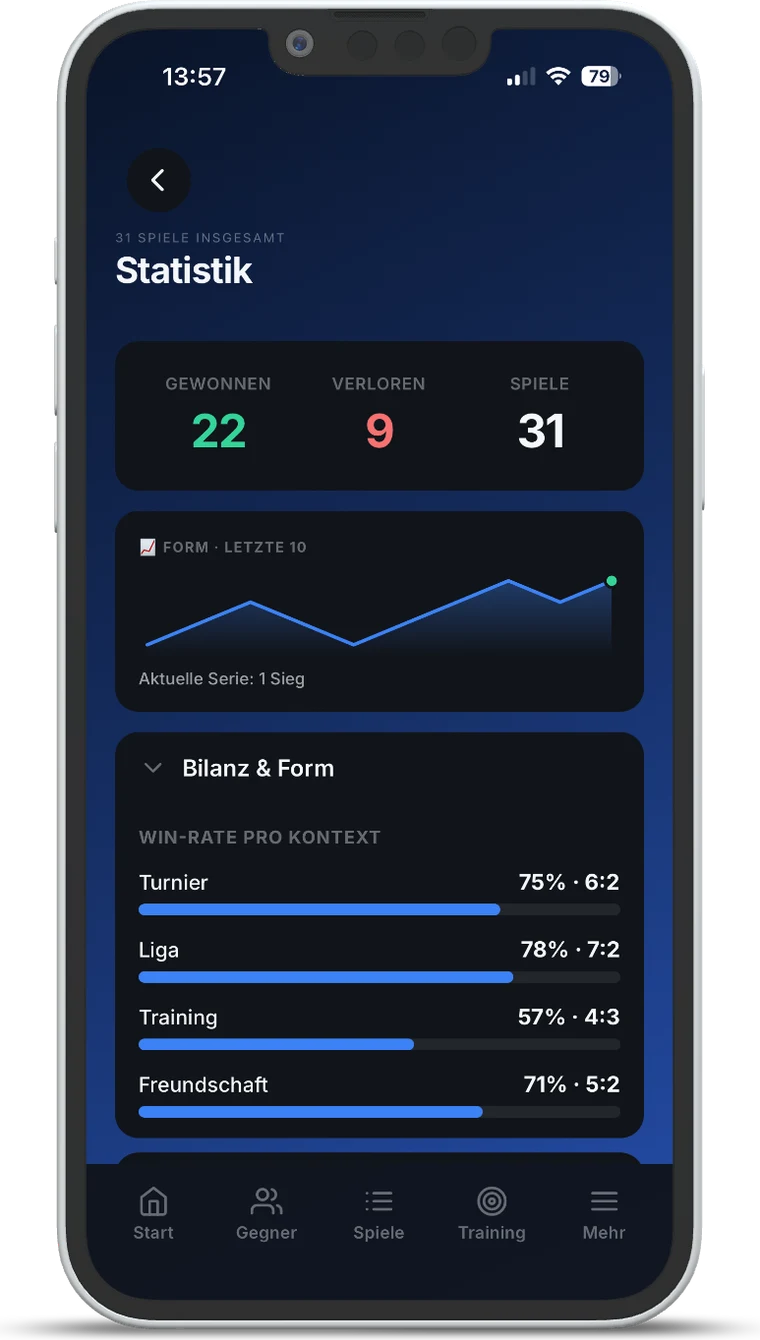
From the matches you record, the app builds a picture you could never assemble in your head: what is your record against defenders, really? Which rubbers give you trouble? Is your form heading up or down right now?
This is the point where single results turn into a statement. One lost match is bad luck. Five lost games against the same type of player is a pattern.
Know your opponent before you walk up
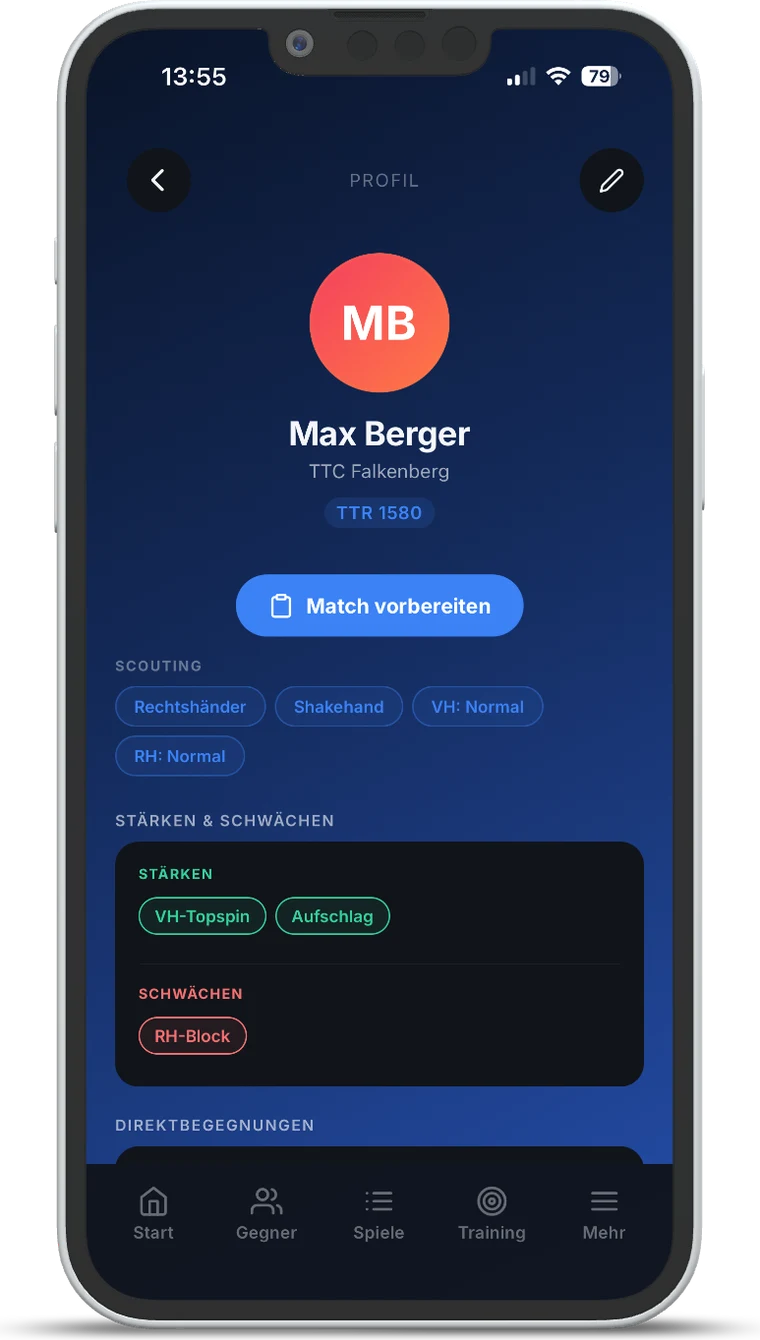
Opponent scouting works the same way, only pointed at your next opponent: playing style, rubbers, weaknesses documented from earlier meetings — instead of trying to recall details from three months ago.
The pre-match preparation pulls it together in time for the next match, so what you learned arrives where it counts, and not afterwards.
Training on what is actually missing
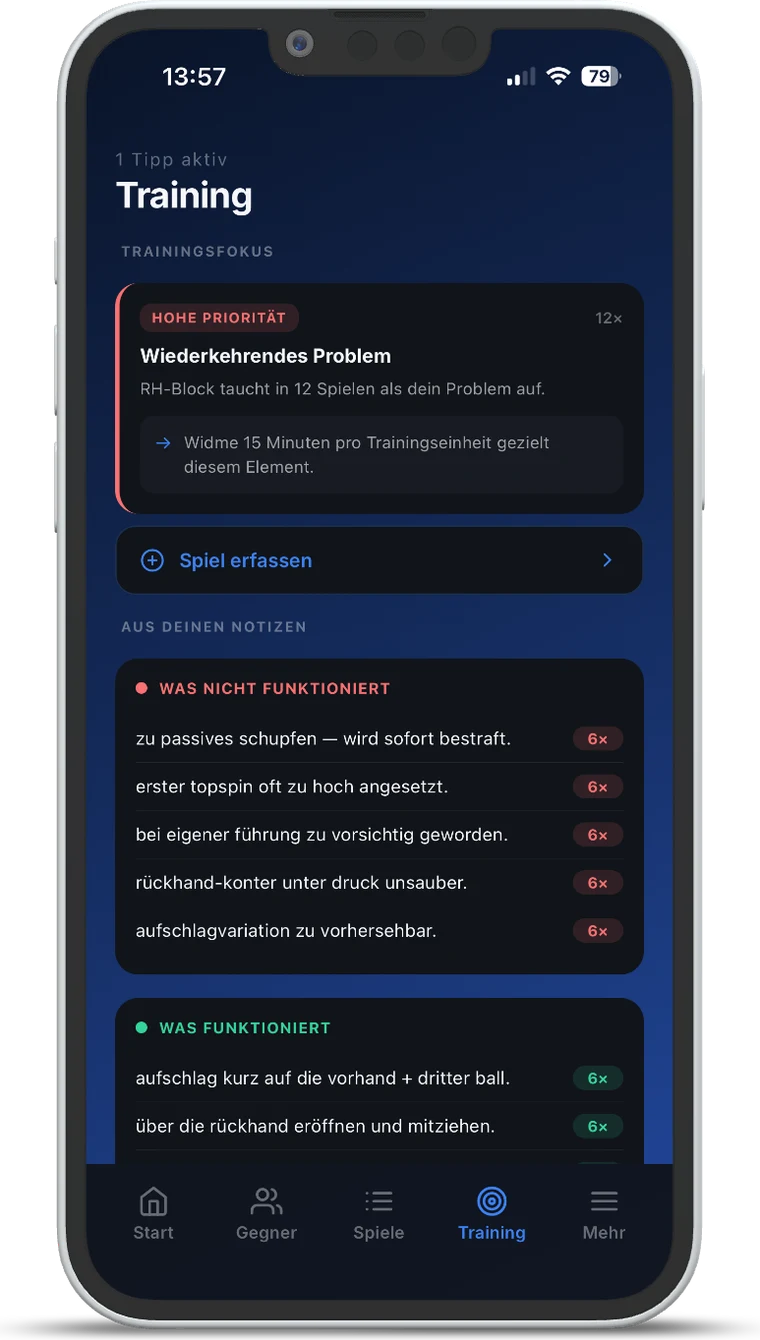
The training section closes the loop. Instead of picking drills by feel, the app shows where the recorded data says it hurts — games lost by a narrow margin, weaknesses against certain types of player, a technical problem that keeps surfacing in your notes.
Every hint comes with a concrete drill suggestion. On top of that your own notes get aggregated: what works across all your matches, and what does not.
The catch: it does not work without upkeep
This view does not come for free. Before patterns can show up, a few matches have to be in there — a single match says nothing, three to five are usually enough for the first solid statements. That costs a few minutes after the match, no more, but not nothing either. Install the app once and never enter another match, and you will get nothing out of it. The effort is small but real — and it is exactly where most “let me try a training app” attempts fizzle out. The difference is sticking with it for a handful of matches.
What changes once you know what to work on
The effect after that is usually quick to feel. Instead of spreading every session thinly across everything, you work specifically on what actually cost points in your recent matches — the backhand return against short backspin, the mental switch against defenders, the pace on the third ball. It is no miracle cure and it does not replace technical training. But it makes sure the training time you are investing anyway lands where it matters — and that the next deficit against the same opponent is not a surprise all over again.
Try it yourself
TT Playbook Player is available for iOS and Android. The Starter version is free and allows 20 opponent profiles and 100 matches — enough to see your first patterns. Pro removes both limits and unlocks the four additional statistics sections, match preparation and the opponent profile sheet: €4.90 per month or €39 per year.
What the app solves in detail is in Six problems TT Playbook solves. Whether it suits the way you play is covered in Who TT Playbook is for.
Know your opponent before the first serve.